

Esinemiskoolitus ei alga lavalt. See algab koosolekust.
Kohast, kus head ideed ei jõua kohale ja vaiksed noogutused peidavad päris mõtteid.
Kahes erinevas organisatsioonis oli sama mure.
Strateegia oli olemas. Inimesed olid targad. Töö käis.
Aga tulemused ei liikunud.
Probleem ei olnud plaanis.
Probleem oli suhtlemisoskuses ja selles, kuidas toimus ideede esitamine.
Mõlemas tiimis oli näha sama mustrit:
inimesed rääkisid, aga sõnum ei jõudnud kohale.
Juhid selgitasid, aga ruum ei tulnud kaasa.
Nad vajasid esinemiskoolitust, mis looks selge sõnumi ja annaks päris praktilised tööriistad.
Miks suhtlemisoskus ja esinemisjulgus loovad päriselt tulemusi
Esimese meeskonna juht märkas, et koosolekud venivad.
Arutelud lähevad detailidesse. Otsused jäävad õhku.
Teises meeskonnas oli teine probleem.
Koosolekud olid lühikesed. Keegi ei vaielnud.
Aga hiljem ei tehtud kokkulepitud asju.
Mõlemal juhul oli puudu esinemisjulgus ja mõjuv esinemine.
Inimesed ei julgenud oma mõtet lihtsalt ja selgelt välja öelda.
See ei olnud teadmiste puudus. See oli esinemishirm.
Ja see peitis end viisakuse, slaidide ja keerulise jutu taha.
Kuidas esinemiskoolitus aitab võita esinemishirmu
Töö algas lihtsa küsimusega:
“Kas sa oskad oma idee ära rääkida ilma slaidita nii, et inimene tahab kuulata?”
Vaikus.
Siis tuli järgmine samm — avalik esinemine turvalises ruumis.
Ilma hinnanguta. Ilma rollita.
Inimesed pidid rääkima oma päris tööolukorrast.
Lihtsalt. Inimlikult.
Seal tuli välja, kui palju energiat läheb tegelikult mõtte peitmisele, mitte selgitamisele.
See on koht, kus enesekindel esinemine hakkab tekkima.
Mitte tehnika, vaid julguse kaudu.
Meie lähenemine — loo jutustamine, storytelling ja selge sõnum
Mõlemas meeskonnas oli murdepunkt sama.
Hetk, kus nad said aru, et loo jutustamine ei ole esinemistrikk.
Storytelling ja story telling on viis, kuidas inimesed infot vastu võtavad.
Kui sa räägid ainult fakte, kuulatakse sind viisakalt.
Kui sa räägid loo, sind kuulatakse päriselt.
Üks spetsialist alustas oma järgmist ettekannet nii:
“Ma räägin teile olukorrast, mis meil eelmisel nädalal kliendiga juhtus…”
Ruum muutus.
See oli veenev kõne ilma pingutuseta.
See oli loomulik mõjuv esinemine.
Sest sõnum oli selge ja inimlik.
Juhtide koolitus ja meeskonna koolitus praktiliste tööriistadega
Mõlemad tiimid said kaasa väga konkreetsed praktilised tööriistad:
- kuidas alustada nii, et sind kuulatakse
- kuidas hoida mõte lihtne ja arusaadav
- kuidas lõpetada nii, et tekib liikumine
See ei olnud teooria.
See oli juhtide koolitus ja meeskonna koolitus, mis muutis igapäevaseid koosolekuid.
Juht õppis rääkima nii, et inimesed tahavad kaasa mõelda.
Tiim õppis rääkima nii, et mõte ei lähe kaduma.
Mis muutus pärast esinemiskoolitust ja suhtluskoolitust
Muutused ei tulnud slaidides.
Muutused tulid vestlustes.
Koosolekud lühenesid.
Arutelud muutusid sisukamaks.
Otsused kiirenesid.
Sest inimestel oli:
- rohkem esinemisjulgust
- parem suhtlemisoskus
- kindlam enesekindel esinemine
- selgem ideede esitamine
Ja kõige olulisem — ühine selge sõnum.
Lõpuks ütles ühe tiimi liige lause, mis kirjeldas mõlema meeskonna teekonda:
“Ma arvasin, et mul on probleem esinemisega.
Tegelikult oli mul probleem sellega, et ma ei osanud oma mõtet lihtsalt öelda.”
See on koht, kus esinemiskoolitus, suhtluskoolitus, loo jutustamine, storytelling ja story telling muutuvad organisatsioonis päriselt väärtuslikuks.
Mitte selleks, et olla huvitav.
Vaid selleks, et olla arusaadav.
Sest kui sõnum on arusaadav, muutub avalik esinemine loomulikuks.
Ja kui esinemine on loomulik, liiguvad inimesed sinuga kaasa.
One Monday morning, a leader sat with the team in a meeting and thought:
“We have good ideas. Why do they never truly land?”
The slides were beautiful. The numbers were correct. The plan existed.
But the room was filled with a silence that said more than words.
People nodded. No one disagreed. No one asked questions.
And after the meeting, very different conversations happened in the hallway.
The problem was not strategy.
The problem was communication skills.
The leader realized it wasn’t about what they were saying.
It was about how they were saying it.
They needed a clear message.
They needed the ability to do idea presentation in a way that people would actually listen.
They needed impactful public speaking.
But most of all — they needed presentation courage.
The team was full of very smart people.
Experts who deeply knew their field.
But when the moment came to speak to a wider group, the same pattern appeared:
- the voice became quiet
- the eyes dropped to the slides
- the talk became complicated
- the point disappeared
This was classic presentation fear, which no one dared to name.
The leader wasn’t any better.
There was experience. Position. Authority.
But there was no confident presentation that would make people think along, instead of just listening politely.
Meetings dragged on. Decisions stayed in the air.
People didn’t understand where things were heading.
At that moment, the leader understood:
we don’t need another strategy day.
We need presentation training, communication training, and in fact proper leadership training and team training.
In the first workshop, they were asked a simple question:
“Can you explain your idea without a single slide so that someone actually wants to listen?”
Silence.
Then came another question:
“Do you use storytelling in your daily work?”
Someone said, “We are not marketers.”
And that’s where things started to open up.
They were shown that storytelling is not a marketing tool.
And story telling is not a performance trick.
It is how people think.
How they make decisions.
How they understand.
When you speak only in facts, people listen politely.
When you tell a story, people truly listen.
The exercises were simple. But uncomfortable.
Explain your project as if you were talking to a friend.
Explain your goal without using a single complex term.
Explain your idea so it fits into two minutes.
At first, it became obvious how deeply rooted the habit was to hide the point behind complicated talk.
But step by step, things started to change.
People discovered they actually had very good stories.
They had just never thought that stories were allowed at work.
They received practical tools to structure their thoughts:
- a beginning that grabs attention
- a middle that keeps it
- an ending that drives action
This changed everything.
The next meeting felt different.
One specialist started the presentation like this:
“Let me tell you about a situation that happened with a client last week…”
Everyone listened.
No slides. No complications.
This was a persuasive speech.
This was truly impactful public speaking.
The leader noticed that people began asking more questions. Thinking along. Even disagreeing.
And that was a good sign.
Because it meant the message had landed.
A few months later, the leader said:
“Our biggest change was not a new process.
Our biggest change was that people dare to speak.”
This is what public speaking inside an organization really means.
Not on a stage. But in meetings. Discussions. Decisions.
When people have presentation courage, the whole team’s communication skills improve.
When a leader has confident presentation, trust grows.
When idea presentation becomes clear, things start moving faster.
They realized that presentation training is not about performing.
Communication training is not about talking.
These are about helping the organization think in the same rhythm.
And when that happens, everything changes:
Meetings become shorter.
Decisions become faster.
People come along.
Because there is a clear message.
And the skill to deliver it.
In the end, one team member said a sentence that summed up the whole journey:
“I thought I had a problem with presenting.
Actually, I had a problem with not knowing how to explain my thoughts simply.”
This is where storytelling and story telling become the most practical skill in an organization.
Not to be entertaining.
But to be understandable.
And when you are understandable, you are impactful.
And when you are impactful, people move with you.

ONLINE COURSE
Get ready! Our online course English version is launching soon.
Sign up for the waiting list to be the first to know!

SELF-TRAINING CHECKLIST
EYE CONTACT
● Am I making eye contact with the audience, and could I be making more of it?
● Am I distributing my gaze evenly among all of the listeners so as to engage everyone?
BODY LANGUAGE
● Are my hand gestures enhancing my message?
● Are my hand movements natural, or too repetitive and mechanical?
● Am I making any unconscious movements, like fidgeting or twitching?
SPEECH AND VOICE
● Am I emphasizing important words in sentences?
● Are my emphases correctly placed in sentences?
● Am I using pauses and moments of silence effectively?
OVERALL IMPRESSION
● Does the audience feel like I’m communicating with them, not just focused on myself?
AND MOST IMPORTANTLY…
● Do I feel like I’m interacting with the audience, not just focusing on myself?
EXCELLENT EXAMPLE OF SPEECH POLYPHONY
The message and main theme are straightforward, yet they are conveyed through various simultaneous dimensions: history, politics, family relationships, current events, personal views, and naturally, clever ironic humor. The same pattern is evident across different levels.

GOOD EXAMPLE OF USING STORIES AND EXAMPLES IN EXPLAINING MESSAGES
This is the most-viewed (almost 22 million times) TED conference talk, showcasing how stories and examples can effectively clarify one’s messages.
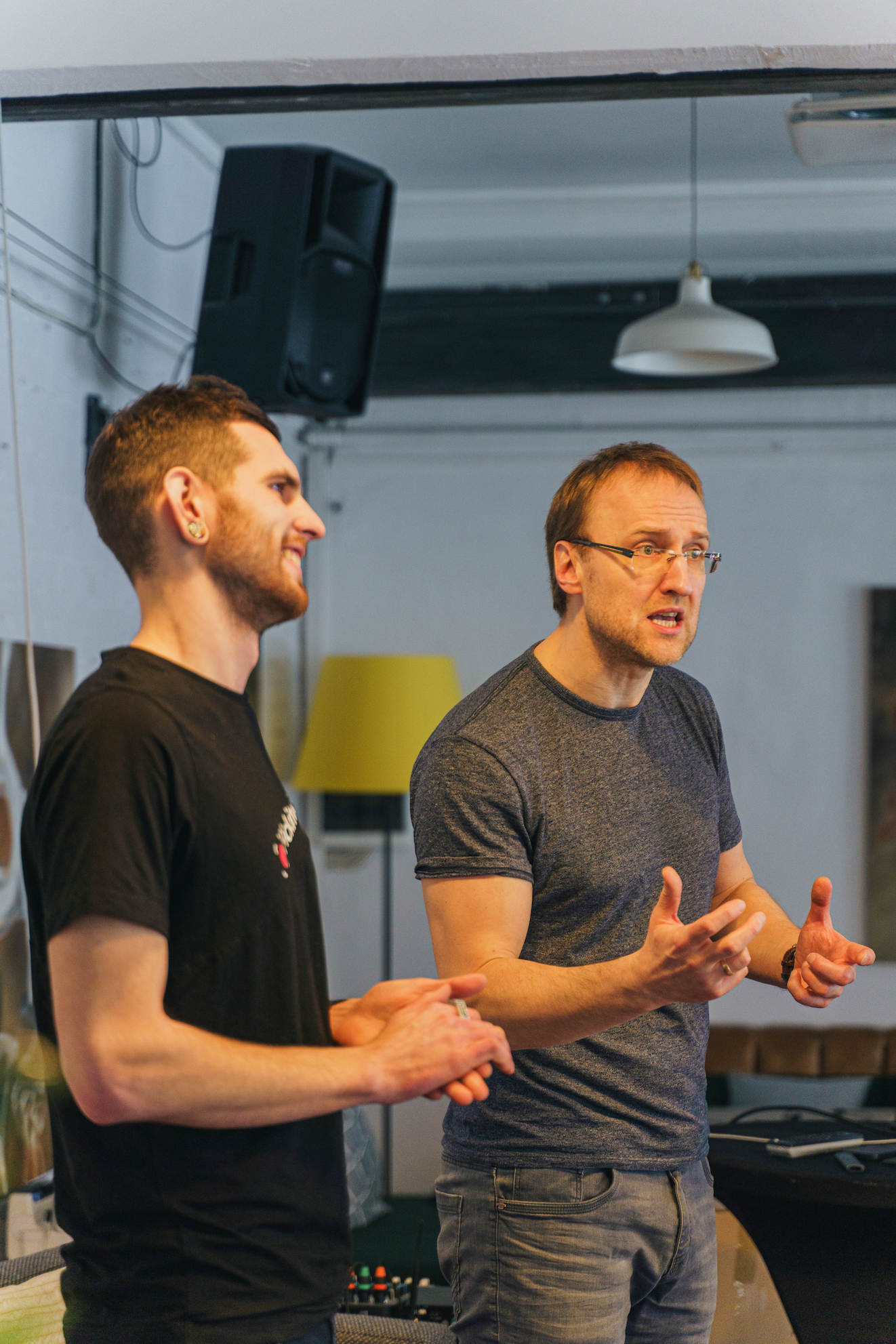
We Helped launch the Solaride Academy
We agree with Solaride: “Practice is what really helps you grow, not just theory!” Keeping this in mind, Anonymous Presenters taught Solaride’s team leaders the basics of good presenting. These skills are vital for clearly sharing your ideas, whether on stage, pitching to sponsors, or explaining complex ideas to your team. Basically, if you’re not clear and logical in your expression, great ideas might get lost, making the world a less bright place. Keep it up, Solariders – you’re building a new future, and it’s been great working with you.

Team Training Experience: ‘How’ is Just as Important as ‘What’
Last week, a highly creative group, the team from the creative and design agency Division, stepped onto the stage with their prepared speeches. At the training, they learned, among other things, how to connect with the audience, how to tell a story, and how to use support materials effectively. They studied theory and did many practical exercises.
For a fertile creative ground, opportunities for development and rest are more vital than just hard work. Together, we are smarter, more vigorous, and thus better partners for our clients.
Clear and convincing presentation of ideas and thoughts is a crucial skill for a creative agency employee, as taught by one of the creators at Anonymous Presenters, Mart Koldits. It’s unfortunate that today, due to the obsession with digital devices, young people’s face-to-face communication skills are increasingly lacking.
The team went through a multi-day practical program, analyzing reasons for loss of focus and learning how to create an emotional connection with the audience. Even a great story can’t make a poor speaker a good presenter. ‘How’ you do something is just as important as ‘what’ you do.
AIGI SOOL, Division team leader and partner

WHAT CHARACTERISTICS SHOULD A LIVELY AND EFFECTIVE PRESENTATION HAVE?
Here’s a fun and insightful example of an analytical approach to speeches, breaking down in detail the characteristics that a truly LIVELY and EFFECTIVE presentation should have.

ARISTOTLE’S 3 TIPS FOR GOOD SPEAKERS
We know Aristotle as a great Ancient Greek philosopher. But how could he have shared his wisdom if he wasn’t a good speaker? Here are his three tips to consider in your next speech:
- Think About Your Audience, Not Yourself.
Preparing a good speech often means endless hours. But what do most people think about? “What if I fail?”, “What if I seem incompetent?”, “Can I answer potential questions?” Aristotle advises forgetting these worries and focusing on the people you’re addressing and trying to engage. Simple, right? Yet, it’s hard to do.
Start by asking: Who is your audience? How many will there be? Their age? Gender? What do they know about you and your topic? Why are they there? How can you help them? Before writing, think about your speech’s goal – to entertain, inform, or inspire?
2. Understand and Please Your Audience.
You may think your speech is about quarterly sales, company policy, or a new invention. But your audience is focused on something more personal – happiness.
Aristotle lists several things that make people happy: health, family, wealth, position, etc. Success as a speaker mainly depends on addressing the topic from the audience’s perspective – speaking in a way they truly understand.
Let’s say you’re offering a financial product. You know it’s good and beneficial. The numbers prove it. But what makes your audience happy? A long lecture on numbers or an explanation of how these numbers improve their lives?
3. Speak in Your Audience’s Language.
Regardless of what you offer, the audience’s decision to agree with your ideas depends on how trustworthy they find you. Aristotle wrote, “If speakers behave inappropriately, their credibility is questioned – even if they speak the truth.”
Intuitively, uncomfortable body language or inappropriate attire can distract from your message. Instead of worrying about dos and don’ts, focus on framing your presentation in the audience’s cognitive universe. If your audience uses the metric system, don’t talk in inches.
6 ESSENTIAL RHETORICAL TECHNIQUES
A great overview of 6 key rhetorical techniques that have been effective from antiquity to the present. Warning: If you’re not familiar with these concepts, after watching this video, you will start perceiving speeches in a whole new way.
Speak to the Point, and Briefly!
Speak in short sentences and express your ideas clearly!
Nowadays, much of the communication with teams and clients happens through computer screens. Therefore, it’s exceptionally important that every time you present or communicate with your people, remember one principle: speak to the point and do it as briefly as possible. Avoid being wordy and stay focused. One idea at a time, or as our Mart says: ‘One samurai at a time!’ Why? Because otherwise, your message won’t reach your target audience, and your goals and desires won’t be understood.
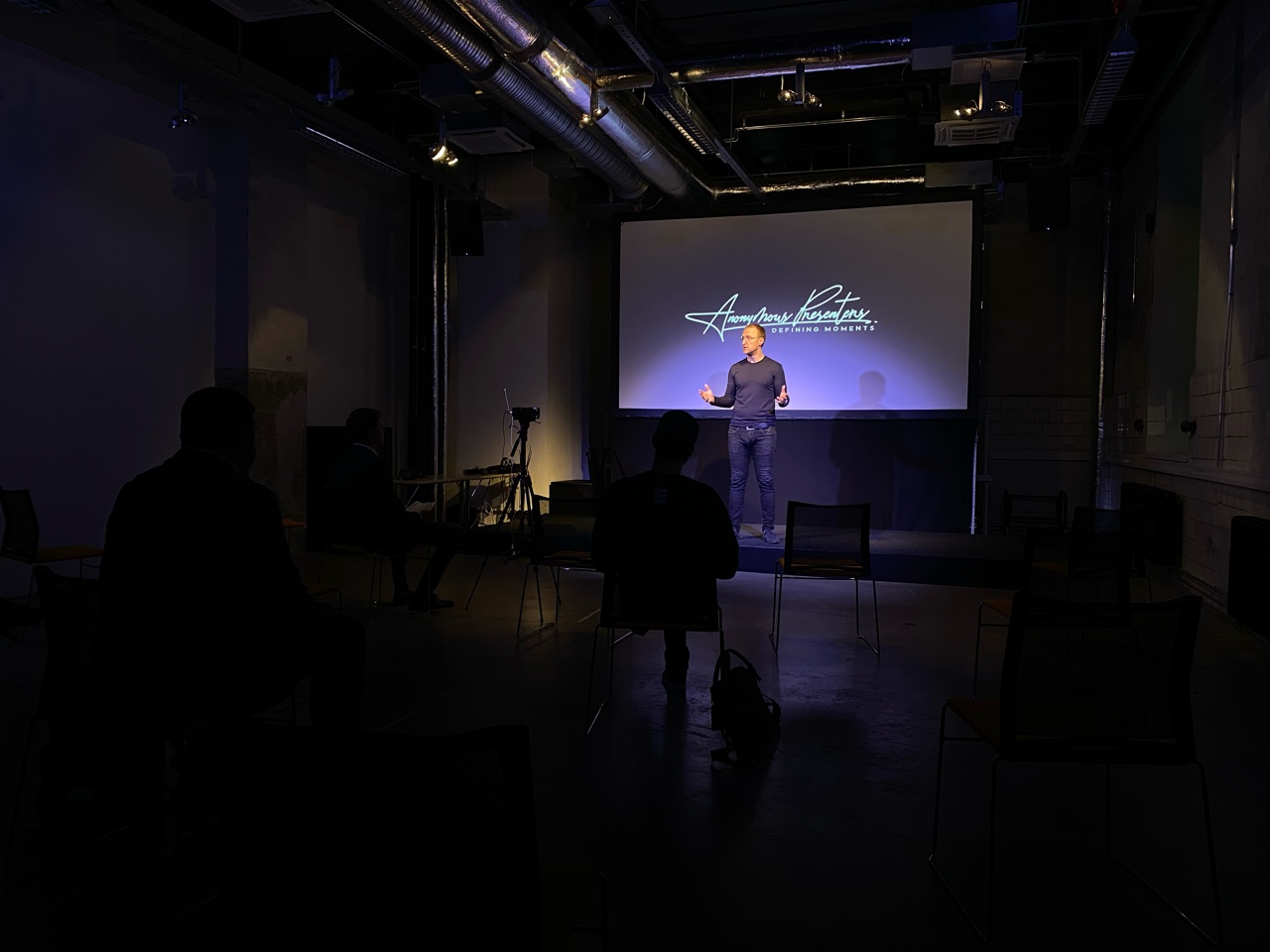
Why Convincing Team Presentations are Essential for a Company’s Success?
Why did we add team training sessions to our executive masterclasses? The reason is straightforward – company leaders wanted them. We realized that, just like impactful presentations by top executives, it’s equally important for team members to express their thoughts clearly to their colleagues, to inspire with their presentations, and to introduce their ideas engagingly. We understood that important developments could stall due to poor presentation skills, where brilliant ideas don’t reach the audience.
Our meetings are conducted both in-person and virtually. Virtual trainings have enabled companies to include employees regardless of their location, whether they are in Oman, Serbia, or any other country. And it’s great to see that we can share our experiences effectively, regardless of the medium used.
Speech is Always a Dialogue
You don’t need long speeches to inspire. A short, impactful speech can be more powerful than a long one. It’s important to catch the right moment. Like in the film scene where rugby captain François Pienaar motivates his team, use the mood around you. Remember, effective speaking involves both listening and talking. Enjoy watching!
Hardi Kinnas

We Learn to Speak Better, But What About Listening?
William Ury, a globally recognized and influential expert in negotiations, emphasizes the importance of listening, a skill often unfairly neglected. Next time you step onto the stage, we recommend listening to your audience first, then speaking to them.
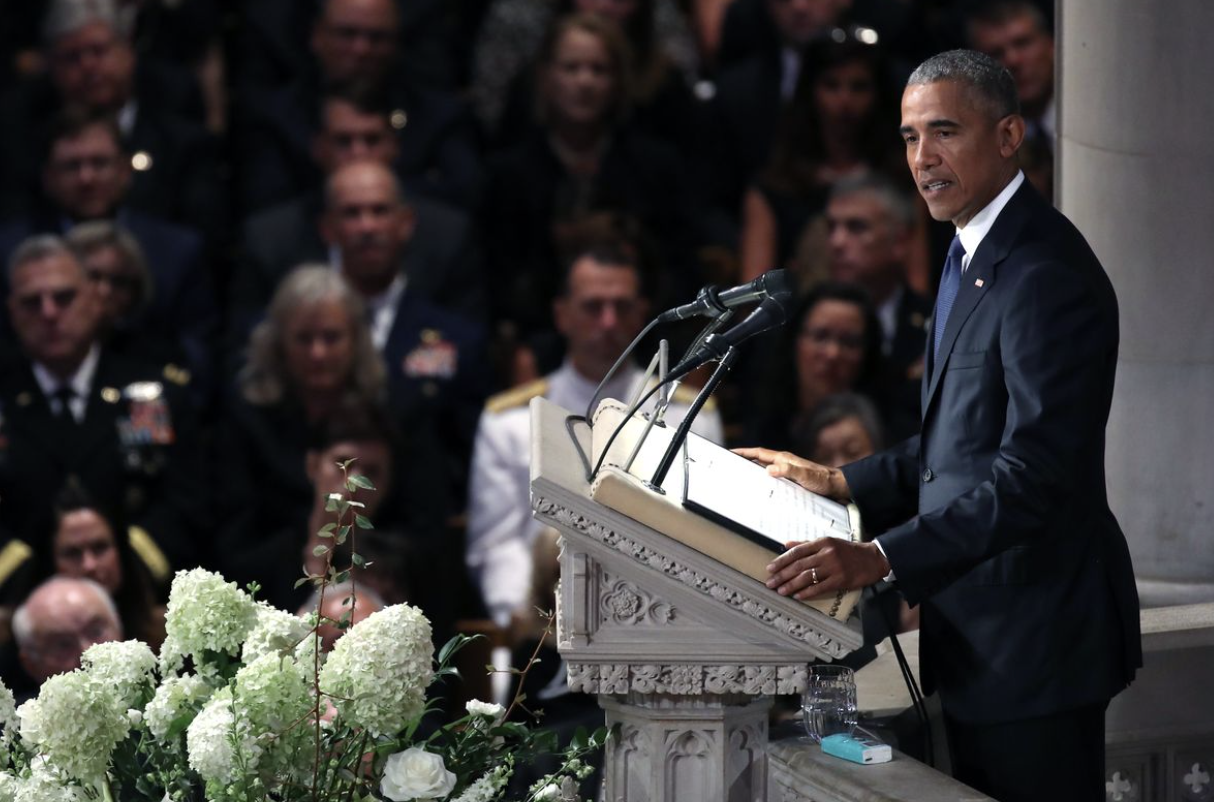
Speech as a Rebirth of Thoughts, Not Just Reading Text
Here’s an excellent example of how, even when reading text verbatim from paper, one can speak as if they’re actively recalling and formulating the thoughts they’re sharing. This method also gives the speaker time and adds impact to their words.
It’s also a great example of delivering a speech in a challenging situation. What’s more difficult than giving a eulogy for a man who has been your public adversary throughout your life? Senator McCain was one of Obama’s major and vocal critics.
The Speech That Turned an Unknown Young Man with a Funny Name into the U.S. President
In 2004, Illinois Senator Barack Obama was not widely known. But after delivering one speech, everything changed.
What’s a good example of starting a speech personally – from current situations and one’s own experiences? How do you introduce big topics using specific personal stories? How to begin calmly and build momentum throughout the speech? And how to summarize big topics into impactful, memorable punchlines?
Storytelling – It’s Something We All Naturally Do!
A great explanation of why storytelling is the most effective tool for persuasion: